

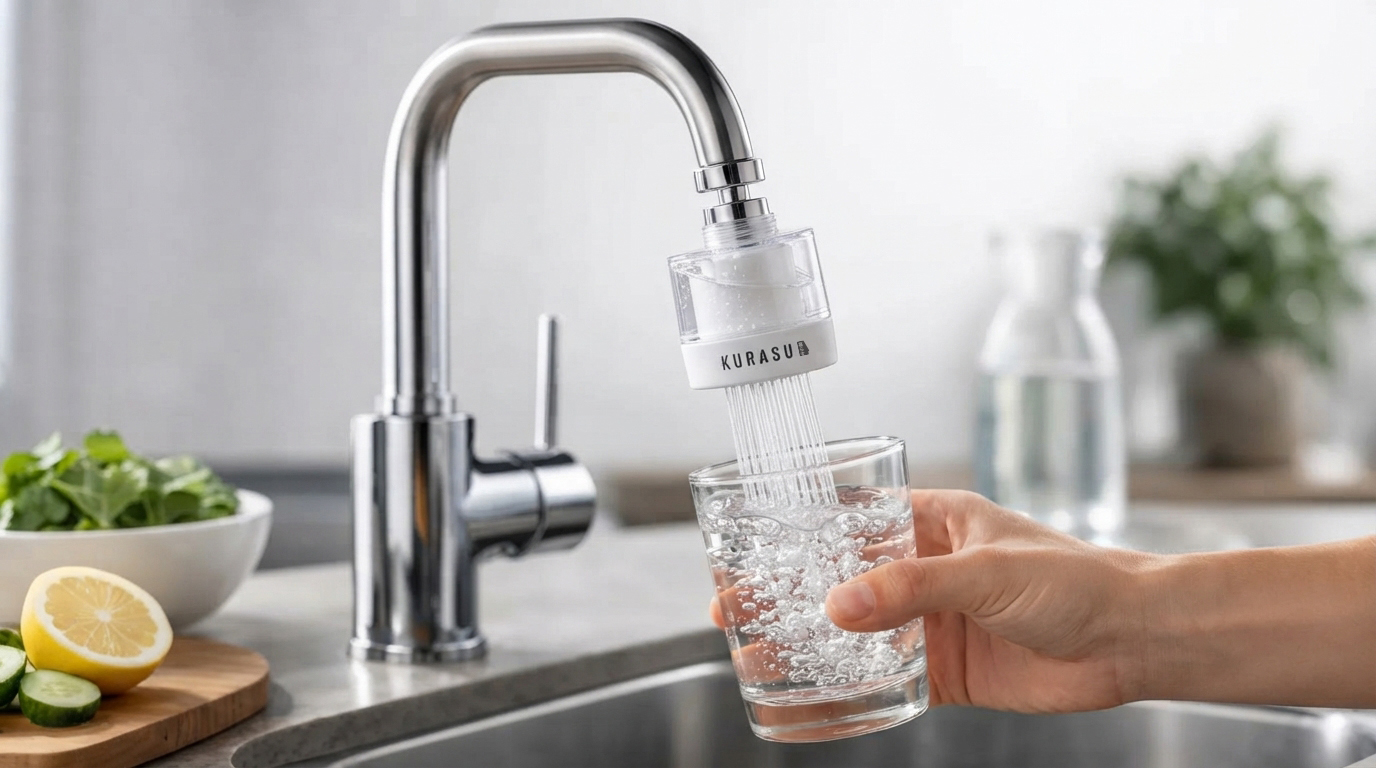
The water at your kitchen sink touches more of your day than you may realize. It rinses produce, fills pots for pasta and soup, washes baby bottles, and becomes the first glass of water you reach for after a long day. A kitchen faucet filter is a simple way to make those small routines feel more considered, without changing your plumbing or taking over your countertop.
For many homes, the appeal is not about turning the kitchen into a laboratory. It is about creating a cleaner way to live: water that looks, smells, and tastes more pleasant for the everyday moments that matter.
What a Kitchen Faucet Filter Can Do
A faucet-mounted filter attaches directly to a compatible kitchen tap and treats water as it flows through. Most household filters are designed to reduce common taste- and odor-related impurities, including chlorine, as well as sediment and certain particles that may affect water clarity.
The result can be especially noticeable when you drink tap water regularly or use it in simple foods where water is part of the flavor. Think tea, coffee, rice, oatmeal, soups, ice cubes, and washed fruits and vegetables. When water has a strong chlorine scent or an unfamiliar taste, it can change how these daily staples feel.
A kitchen faucet filter can also give you more confidence during food prep. Filtering the water you use to rinse leafy greens, fill a cooking pot, or wash reusable bottles adds a thoughtful layer to your kitchen routine. It is a small home upgrade, but one you can use many times a day.
That said, a faucet filter is not the same as a whole-home water treatment system. It does not repair old pipes, solve every possible water-quality concern, or make unsafe water safe in every situation. If your water has an unusual color, a persistent odor, visible particles, contact your water provider or consider appropriate testing first. A filter works best when it is matched to a realistic household need.
Why Faucet Filtration Fits Everyday Homes
There are plenty of ways to filter drinking water, from pitchers and countertop systems to under-sink units. A faucet-mounted option has a particular advantage: it is available exactly where kitchen water is already used.
Unlike a pitcher, it does not need to be filled and chilled before use. Unlike a larger under-sink system, it usually does not require drilling, permanent installation, or a plumbing appointment. This makes it a comfortable choice for renters, apartment residents, first-time homeowners, and anyone who wants a practical improvement without a major project.
It also keeps the counter clear. In a smaller kitchen, every surface has a purpose. A compact purifier at the faucet can feel more natural than another appliance beside the kettle, toaster, and dish rack.
The trade-off is flow rate and capacity. Because faucet filters are compact, filtered water may run more slowly than unfiltered water. Cartridges also need regular replacement to continue performing as intended. For a household that uses large volumes of filtered water every day, an under-sink system may be a better fit. For convenient drinking, cooking, and rinsing at one sink, a faucet filter can be the easier choice.
Start With Your Faucet Type
Before choosing a kitchen faucet filter, check the shape of your tap. Most faucet-mounted units are made for standard threaded faucets. Pull-down sprayers, pull-out sprayers, sensor faucets, square spouts, and faucets with hidden threads may not be compatible.
Take a close look at the aerator at the end of the spout. If it unscrews, you may be able to use an adapter supplied with the purifier. If you are unsure, measure the opening or compare it with the compatibility guidance provided for the model you are considering. This small check prevents a frustrating delivery-day surprise.
Choose the Filtration Level for Your Routine
For many households, the main goal is reducing chlorine taste and odor while catching sediment. That is often enough to make drinking water and food preparation feel more pleasant.
If you have a more specific concern, look for clear information about what the cartridge is designed to reduce. Avoid choosing based on vague promises alone. Practical details such as filter media, cartridge capacity, recommended replacement timing, and compatible faucet types are more useful than dramatic claims.
A good product should make its purpose easy to understand. Clean water routines should feel reassuring, not overly technical.
Do Not Forget Replacement Filters
The purifier housing is only one part of the system. The replacement cartridge is what keeps filtration active over time. Before buying, make sure refills are easy to identify and available for the exact model you choose.
Modular systems are especially helpful here. Kurasu designs kitchen purification as a practical routine, with replacement filters that make it easier to continue caring for the water you use every day. Keeping one spare cartridge at home can save you from stretching an old filter past its recommended life.
Installation Should Feel Simple
A faucet filter is meant to be a low-effort upgrade. In most cases, installation begins by removing the existing aerator, selecting the correct adapter if needed, and tightening the purifier according to its instructions. Hand-tightening is often enough. Forcing the parts too tightly can damage threads or make future removal difficult.
After installation, check for drips around the connection. If you see a leak, remove the unit, inspect the washer and threads, then reinstall it carefully. A correctly fitted purifier should sit securely without wobbling or dripping.
Look Beyond Filtration: Material Safety
While evaluating a filter’s ability to remove chlorine and sediment is crucial, checking what the filter unit itself is made of matters just as much. The market is filled with budget-friendly options that skip strict material testing, using low-grade plastics, adhesives, or metal alloys that can actually release harmful substances back into your water over time.
To ensure your home upgrade stays truly safe, look for purifiers built to meet RoHS (Restriction of Hazardous Substances) and REACH standards:
RoHS Certification: Restricts hazardous heavy metals—such as lead, cadmium, and hexavalent chromium—as well as toxic phthalates commonly found in lower-quality plastics. This ensures the physical housing, seals, and connections won't leach hazardous elements into the water passing through.
REACH Compliance: Regulates chemical substances across the entire manufacturing lifecycle, prohibiting Substances of Very High Concern (SVHCs) like unsafe plasticizers and harmful synthetic additives.
A reliable purifier should enhance your health, not add unknown chemical variables to your tap. Verifying these material safety certifications ensures that the product filtering your water is as clean and considered as the routines you are trying to create.
Make It Part of a Better Kitchen Routine
The value of filtered kitchen water is often felt in quiet moments rather than dramatic ones: a clearer-tasting glass beside breakfast, a pot of soup started with care, strawberries rinsed before sharing, or a refillable bottle ready by the door.
Choose a kitchen faucet filter that fits your tap and your real habits, replace the cartridge on time, and let the change stay simple. The most lasting home improvements are often the ones that make everyday life feel a little cleaner, lighter, and happier.